Tafilalet
The ForgivenTafilalet is presented as North Africa’s largest oasis, a region where palm groves press against desert plains and fossil-bearing terrain sustains a sharply differentiated local economy. For David, it is both a place of uneasy passage under Abdellah’s control and a landscape whose resources organize the lives and rivalries of the communities around it.
Oasis and Passage
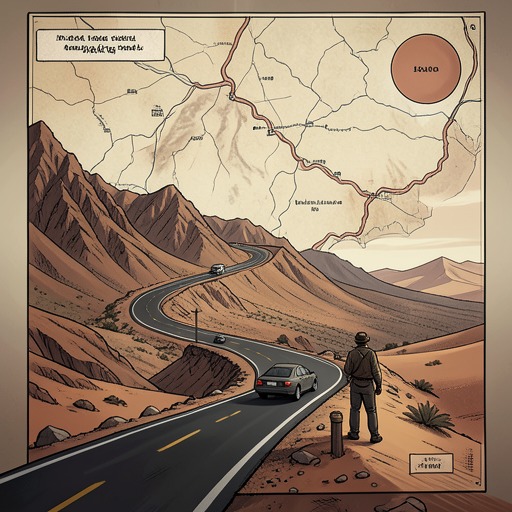
Beyond Errachidia, the road narrows through drifting sand and stretches hemmed in by low mud walls, behind which palm groves rise in the wind. Men with goats walk along the roadside; farther on, the road grows cracked and constricted as the palms thicken and desert opens on either side. Abdellah identifies the route as nearing Erfoud, within Tafilalet, and notes the region’s connection to Morocco’s royal family.
David travels in a crowded car with Abdellah and other men of Aït Kebbash. They share dates and listen to religious music, but David has not been introduced to the other passengers and reads this omission as a sign that he is not being treated as an ordinary guest. When a passenger lifts an old rifle, it is aimed outward, not at David; the men appear anxious about the landscape closing around the road. Near midnight, Abdellah decides they will stay at a hotel rather than continue to Alnif in the dark.
Hospitality and Unease
At the hotel, the manager offers David food at the request of his hosts: a tagine described as a special dish of Tafilalet. The hospitality does not dissolve the imbalance of the situation. David eats while trying to maintain a show of English stoicism before the men he regards as captors, but the Aït Kebbash ignore him. The region’s lodging also reflects the growth of desert tourism: new five-star resorts line the roads outside Erfoud, and package tours bring visitors who mostly remain near town.
Fossil Economy and Local Rivalries
On the road to Merzouga, David passes Aït Atta prospectors riding rickety bicycles with their tools. Anouar explains that they search the desert for aquifers and crinoids, while the men of Tafal’aalt leave those pursuits to the Aït Atta and concentrate on trilobites. The distinction is not merely practical: Anouar describes the Aït Atta as detested rivals, while presenting trilobite collecting as the specialized trade of his own community. He identifies Jbel Issomour as Africa’s richest source of trilobites and says that foreign traders from Germany, France, and the United States pay handsome sums for its Comura trilobites, some specimens fetching hundreds of euros.
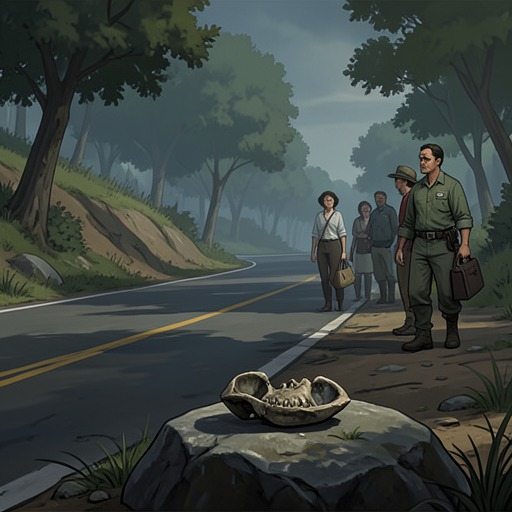
Before sunrise, the party reaches Hmor Lagdad and the Mirzan quarry, set among trenches of scarred red rock. Ragged girls stand near huts with chisels and hammers; their father runs the quarry. A small girl approaches David with a fossil, dances around him calling it an Orthoceras, and sells it to him for a few dirhams after he examines its polished, shell-like form. She gives her name as Tuda, but Anouar gently pulls David away from the tea-drinking group because Abdellah has forbidden him to come near. The encounter places the region’s fossil wealth beside the poverty and child labor of its extraction, while David’s brief purchase offers a glimpse of contact sharply limited by his hosts’ rules.